Wu Zetian (624 – 705)
Quick Summary
Wu Zetian (624 – 705) was a empress consort and major figure in history. Born in Lizhou, present-day Guangyuan (Sichuan, China), Wu Zetian left a lasting impact through The only woman in Chinese history to reign with the title of emperor (huangdi), from 690 to 705.
Birth
624 Lizhou, present-day Guangyuan (Sichuan, China)
Death
December 16, 705 Shangyang Palace, Luoyang (Henan, China)
Nationality
Chinese (Tang, then Zhou)
Occupations
Complete Biography
A Daughter Of The New Nobility
Wu Zhao was born in 624, the seventh year of the reign of Gaozu, founder of the Tang. Her father, Wu Shiyue, had been a timber merchant in Shanxi before joining Li Yuan during the revolt that brought down the Sui; he ended as a provincial governor with a title. That recent fortune shaped his daughter's whole career: the Wu house did not belong to the great northwestern clans that monopolised office, and Tang historians never let her forget it. Her birthplace is disputed — Lizhou, present-day Guangyuan in Sichuan, where her father was posted, against Wenshui, the family seat in Bingzhou. Her mother, born a Yang, came from a family tied to the fallen Sui and had her educated unusually well for a girl: the classics, calligraphy, music. Wu Shiyue died in 635, and the sons of his first marriage treated his widow and her daughters harshly. Two years later, aged thirteen or fourteen, Wu Zhao entered the palace at Chang'an as a cairen, "lady of talent", the fifth rank among Emperor Taizong's consorts.
From The Harem To The Convent
Of the twelve years she spent near Taizong almost nothing is securely known. She bore no child, gained no rank, and the annals preserve only one anecdote, which she herself told much later: a horse nobody could break, and her answer — the whip, the mace, the dagger. Taizong is said to have nicknamed her Meiniang. The rest is late reconstruction. What is established is the rule: when the emperor died, in 649, childless consorts left the palace for a convent. Wu Zhao took the tonsure at Ganye monastery, outside Chang'an. She was twenty-five and, by every institutional logic, her public life was over. It did not stay over. The new emperor, Gaozong, Taizong's ninth son, is said to have noticed her before his father's death — a detail that comes from hostile sources, which read it as an offence against filial piety, and cannot be verified. Around 651 or 652 he brought her back to the palace; Empress Wang, who had no child, may even have encouraged the return in order to weaken a rival.
Rise Beside Emperor Gaozong
In four years Wu Zhao moved from consort to empress. She bore Gaozong a son in 652, Li Hong, then three more children, and in 654 received the title of zhaoyi, the highest below empress. The following year Empress Wang and the consort Xiao were accused of witchcraft and attempted poisoning; deposed and imprisoned, they died inside the palace. The detailed narrative of that accusation comes from the Zizhi tongjian, written four centuries later by a scholar who regarded Wu's reign as a monstrosity: the machinery of the plot reads like a novel, and should be treated as one. What can be verified is political. Wu Zhao's promotion in 655 went through against the ministers inherited from Taizong. Chu Suiliang, who opposed it in audience, was exiled to the far south of the empire and died there. Zhangsun Wuji, the emperor's uncle and the first man of the state, was pushed aside in 659, charged with treason and forced to kill himself. With them fell the aristocratic group that had made the first two Tang reigns.
Government From Behind The Curtain
Gaozong reigned thirty-four years, but his health failed early: a stroke around 660 left him diminished. From then on the empress handled business. The chronicles show her reading reports, settling appointments, sitting behind a curtain during audiences. In 664 the emperor considered deposing her on the advice of chancellor Shangguan Yi; she learned of the plan, obtained his execution, and the curtain was never raised again. In 666 she took part in the Fengshan sacrifices on Mount Tai, the highest ceremony of the imperial religion, officiating herself at the second libation — a liturgical innovation without precedent for a woman. In 674 the couple adopted new titles, Gaozong becoming Tianhuang, Heavenly Emperor, and she Tianhou, Heavenly Empress. Her sons did not last. The heir Li Hong died suddenly in 675, aged twenty-three; late sources speak of poison, modern scholarship recalls the lung disease he suffered from. His successor Li Xian was deposed in 680 for conspiracy, exiled, then forced to commit suicide in 684.
The Regency And Two Deposed Sons
Gaozong died in December 683. His son Li Zhe took the throne as Zhongzong; six weeks later his mother deposed him for trying to give a state office to his wife's father, and replaced him with the younger brother, Ruizong, who reigned without governing and was not even allowed to hold court. The regency was open. In 684 Li Jingye raised an army at Yangzhou; the manifesto written for him by the poet Luo Binwang, itemising the usurper's crimes, remains a classic piece of Chinese prose. The revolt was crushed in six weeks. What followed is what historiography calls the terror: a denunciation system built on copper boxes installed at court, special judges of whom the best known, Lai Junchen, left a treatise on extracting confessions, and the elimination of much of the imperial clan in 688. That the regime was repressive is not in dispute; the exact scale of the executions, reported by annals written by the losing side, still is.
The Zhou Empire And Buddhist Legitimation
In October 690, after an orchestrated campaign of petitions, Wu Zhao deposed Ruizong and took the throne herself — not as regent, not as empress, but as huangdi, emperor. She assumed the name Shengshen Huangdi, "sacred and divine sovereign", and replaced the Tang with a new dynasty, the Zhou, named after the ancient house her clan claimed descent from. Luoyang, preferred to Chang'an, became Shendu, the Divine Capital. Legitimacy could not come from Confucianism, which offered no place to a female sovereign: it came from Buddhism. A passage of the Great Cloud Sutra, reinterpreted at the right moment by the monk Xue Huaiyi, announced the coming of a universal female ruler; the commentary was circulated throughout the empire. At Luoyang she built the Mingtang, the Hall of Enlightenment, nearly ninety metres high, destroyed by fire in 695 and rebuilt at once. An inscription at Longmen records that she had paid from her own purse — twenty thousand strings of cash — for the great Fengxian Buddha completed in 675. She also had a dozen new characters created, one of them for writing her own name.
Examinations Officials And Frontiers
The regime lasted fifteen years, which presupposes an administration. Wu Zhao widened recruitment by examination: more jinshi graduates, a test taken in the sovereign's own presence — the ancestor of the palace examination — the admission of candidates who put themselves forward, and posts opened to scholars from the lesser gentry whom the great clans would never have co-opted. The corollary is that she built a personnel that owed nothing to anyone but her. Some of those men were remarkable: Di Renjie, magistrate then chancellor, heeded enough to persuade her in 698 to recall Zhongzong as heir rather than install a Wu nephew; Lou Shide, who organised the military colonies of the northwest; Wei Yuanzhong, who stood up to her in audience. On the frontiers the record is mixed. The Four Garrisons of Anxi, lost to Tibet in 670, were retaken in 692 by Wang Xiaojie, restoring control of the Tarim basin for half a century. The Second Turkic Khaganate, by contrast, reconstituted itself beyond her reach, and the Khitan revolt of 696-697 cost several armies.
The Fall And The Wordless Stele
The last years belong to two brothers, Zhang Yizhi and Zhang Changzong, favourites she installed at the centre of the palace and whose removal the court could never obtain. In February 705, with the sovereign ill, a conspiracy of senior officials led by Zhang Jianzhi had the brothers killed and secured her abdication. Zhongzong, set aside twenty years earlier, returned to the throne; the Zhou dynasty ended with her. Wu Zhao died on 16 December 705, aged eighty-one, at the Shangyang Palace. Her last act was to renounce the imperial title: she asked to be called Empress Zetian Dasheng, to be buried beside Gaozong, and pardoned the families of Empress Wang, Xiao Shufei and Zhangsun Wuji. She lies at Qianling, the only Chinese mausoleum holding two sovereigns. In front of it stands a stele more than seven metres high that was never inscribed; who had it raised is unknown, and no contemporary source says why it was left blank.
Achievements and Legacy
Major Achievements
- The only woman in Chinese history to reign with the title of emperor (huangdi), from 690 to 705
- Founded the Zhou dynasty in 690 and moved the capital to Luoyang, renamed Shendu
- Widened recruitment by examination: a test before the sovereign, self-nomination, promotion of scholars from outside the great clans
- Retook the Four Garrisons of Anxi in 692, restoring control of the Tarim basin
- Major Buddhist building programmes at Luoyang, including the Mingtang, and documented personal funding of the Fengxian Buddha at Longmen
- Fifty years of effective government under three successive statuses: empress consort, regent, emperor
Historical Legacy
Wu Zhao's reign was written by her enemies. The Jiu Tangshu, the Xin Tangshu and the Zizhi tongjian, composed two to four centuries later by Confucian scholars for whom a woman on the throne was a cosmic anomaly, supply both almost all the factual matter and the verdict that comes with it: usurpation, cruelty, disorder. Imperial historiography settled the problem by treating the fifteen Zhou years as an interregnum, filed inside the Tang annals. The twentieth century reversed the sign without changing the method: 1960s China made her an anti-aristocratic heroine, and Guo Moruo's play a reformer — a portrait as instrumental as the one before it. Recent work — R. W. L. Guisso on the techniques of legitimation, N. Harry Rothschild on her networks, the Cambridge History of China on the administration — shifts the question: less judging the woman than measuring what her reign moved, namely the lasting weakening of the great northwestern clans and the opening of the examinations, neither of which the restored Tang undid.
Detailed Timeline
Major Events
Born into a newly ennobled family
Her father Wu Shiyue, a former timber merchant, had sided with the founder of the Tang.
Enters Taizong's palace
At thirteen or fourteen, as a cairen, the fifth rank of imperial consorts.
Taizong dies; retreat to Ganye monastery
Childless, she is tonsured under the rule applied to consorts without issue.
Raised to empress
Empress Wang is deposed for witchcraft; Chu Suiliang, who opposed the move, is exiled.
Fall of Zhangsun Wuji
The emperor's uncle and first man of the state is charged with treason and forced to kill himself.
Fengshan sacrifices on Mount Tai
She officiates at the second libation, which no woman had done in that rite.
Takes the title Tianhou, Heavenly Empress
Gaozong takes Tianhuang: the couple place themselves above ordinary titles.
Gaozong dies; the regency begins
Zhongzong is deposed six weeks after his accession; Ruizong reigns without governing.
Proclaims the Zhou dynasty
She takes the throne as Shengshen Huangdi and makes Luoyang the Divine Capital.
Zhongzong restored as heir
Di Renjie persuades her to prefer her son to a Wu nephew: the Tang return is assured.
Deposed and dies
A conspiracy kills the Zhang brothers in February; she dies on 16 December at the Shangyang Palace.
Geographic Timeline
Famous Quotes
'If it will not yield to the whip, strike it with the mace; if it still will not yield, cut its throat with the dagger.' — on breaking an unruly horse, words she herself recalled before her ministers according to the Zizhi tongjian.
'Take from me the title of emperor and call me Empress Zetian Dasheng.' — her final will as recorded in the Jiu Tangshu, together with the pardon granted to the families of Empress Wang, Xiao Shufei and Zhangsun Wuji.
External Links
Frequently Asked Questions
Who was Wu Zetian?
The only woman who ruled China with the title of emperor (624-705). A concubine of Taizong, then Gaozong's empress from 655, she governed in fact during her husband's illness, held the regency after his death in 683, deposed two of her own sons and founded the Zhou dynasty in 690, which she led for fifteen years from Luoyang.
Was Wu Zetian an empress or an emperor?
Both, in turn. From 655 to 683 she was Gaozong's empress consort (huanghou); from 690 to 705 she held the title huangdi, that of a reigning emperor, and no other woman in Chinese history ever held it. English blurs the distinction: 'empress' normally means the sovereign's wife, not the sovereign.
Did Wu Zetian have her own sons killed?
In part, and the degrees of certainty differ. Li Xian, deposed in 680, was forced to commit suicide in 684 on her order: that is established. For the heir Li Hong, who died suddenly in 675 at twenty-three, poisoning is alleged only by sources several centuries later, and the lung disease he suffered from is enough to explain his death. The last two, Zhongzong and Ruizong, were deposed but survived and reigned after her.
What was Wu Zetian's Zhou dynasty?
A dynasty she alone founded, in 690, extinguished with her abdication in 705. She borrowed the name from the ancient royal house her clan claimed descent from, set her capital at Luoyang renamed Shendu, and sought legitimacy in Buddhism rather than Confucianism, which offered no model for a female sovereign. Chinese historiography treats it as a parenthesis and files it inside the Tang annals.
Why is the stele at her mausoleum uninscribed?
Nobody knows. A stele more than seven metres high stands before the Qianling mausoleum, where she is buried with Gaozong, and it was never carved. The explanations offered — the dead woman's own wish, her son Zhongzong's embarrassment, the impossibility of praising a reign the restored dynasty had just abolished — are all later conjecture. No contemporary source gives the reason.
Sources and Bibliography
Primary Sources
- Jiu Tangshu (Ancien Livre des Tang), livres 6 et 183
- Xin Tangshu (Nouveau Livre des Tang), livres 4 et 76
- Sima Guang, Zizhi tongjian, livres 199 à 208
Secondary Sources
- R. W. L. Guisso, Wu Tse-t'ien and the Politics of Legitimation in T'ang China
- N. Harry Rothschild, Wu Zhao: China's Only Woman Emperor
- Denis Twitchett (dir.), The Cambridge History of China, vol. 3 : Sui and T'ang China, 589-906
External References
See Also
Related Figures
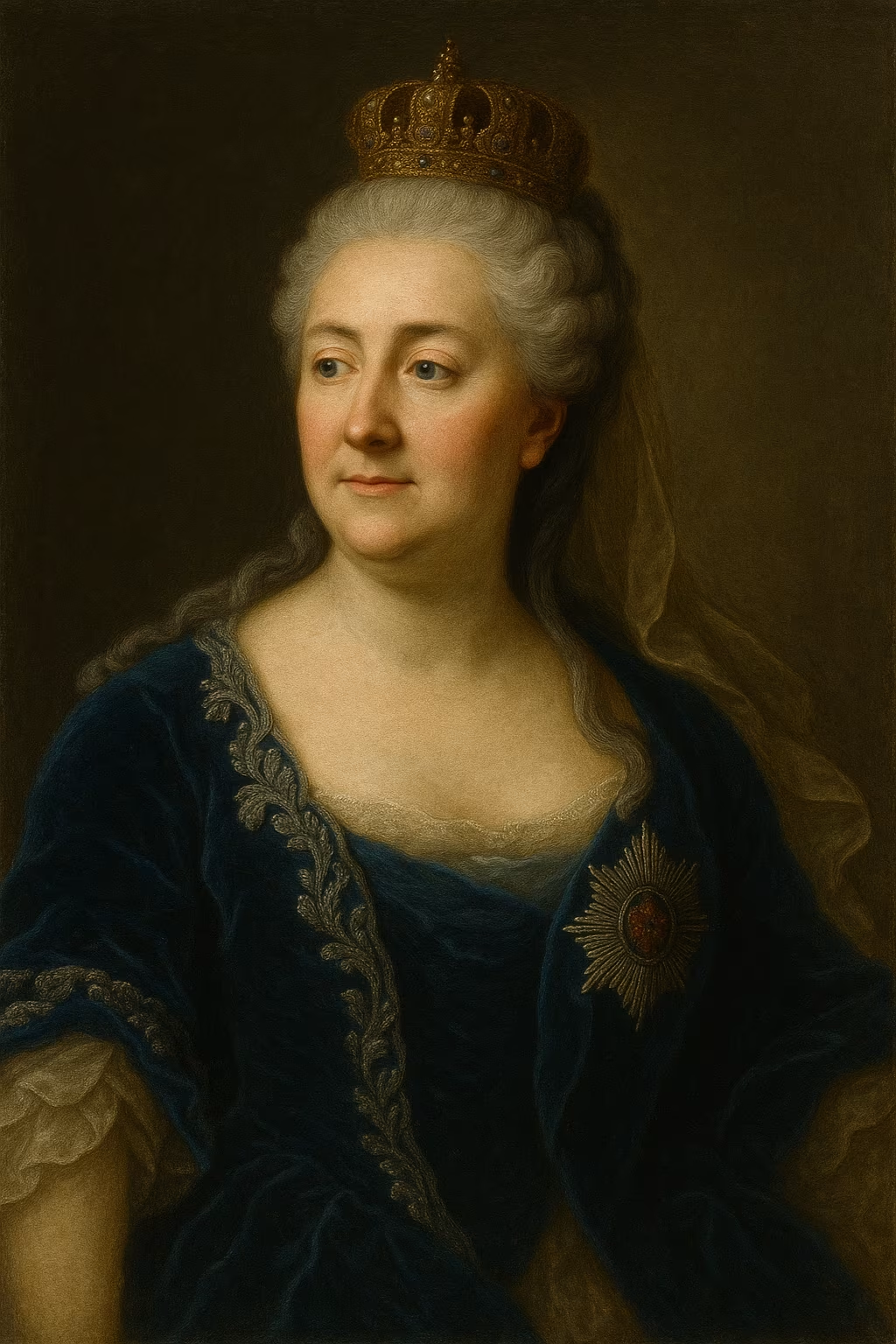
Catherine II of Russia
Empress and Autocrat of All the Russias
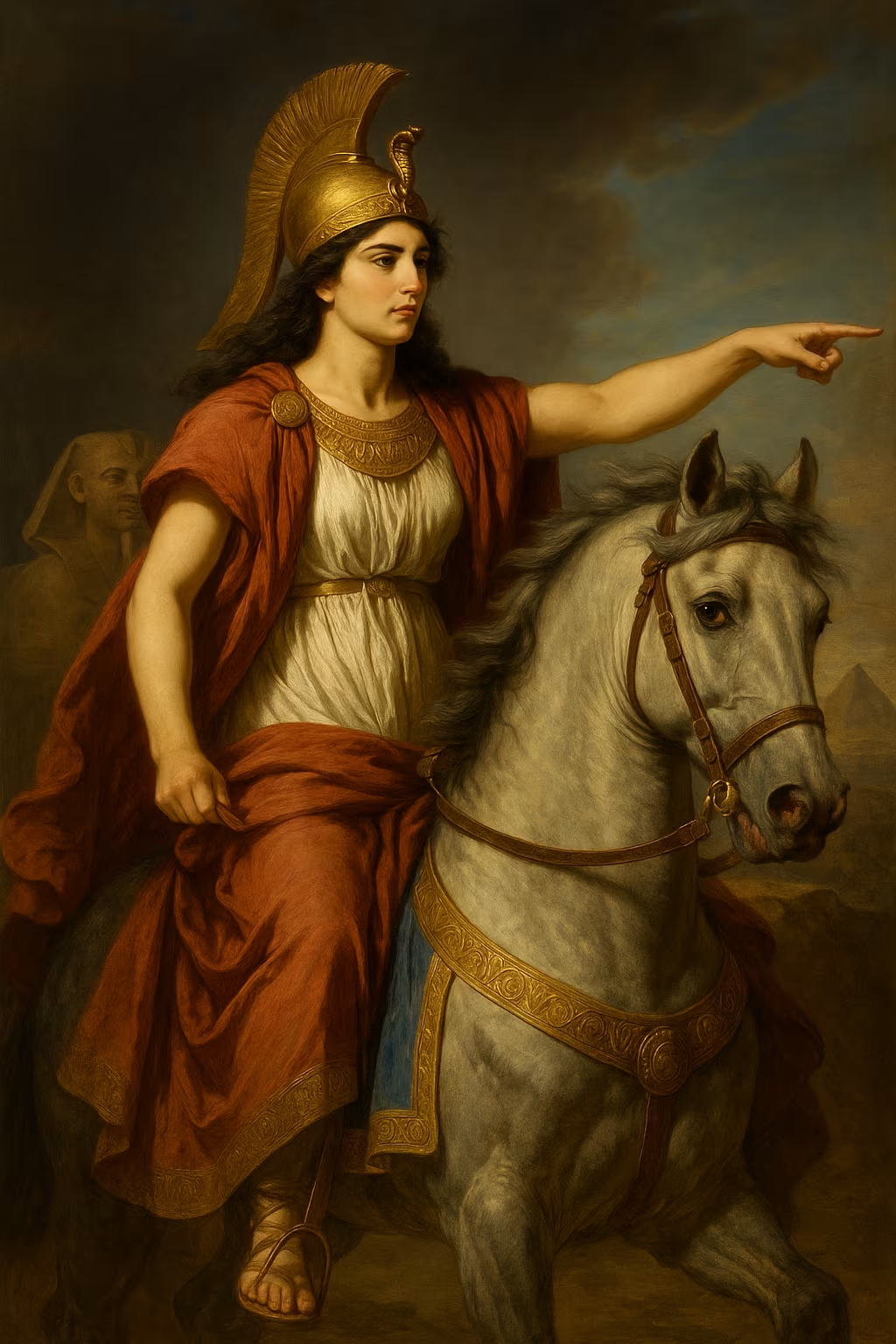
Cleopatra VII Philopator
Last Queen of Ptolemaic Egypt
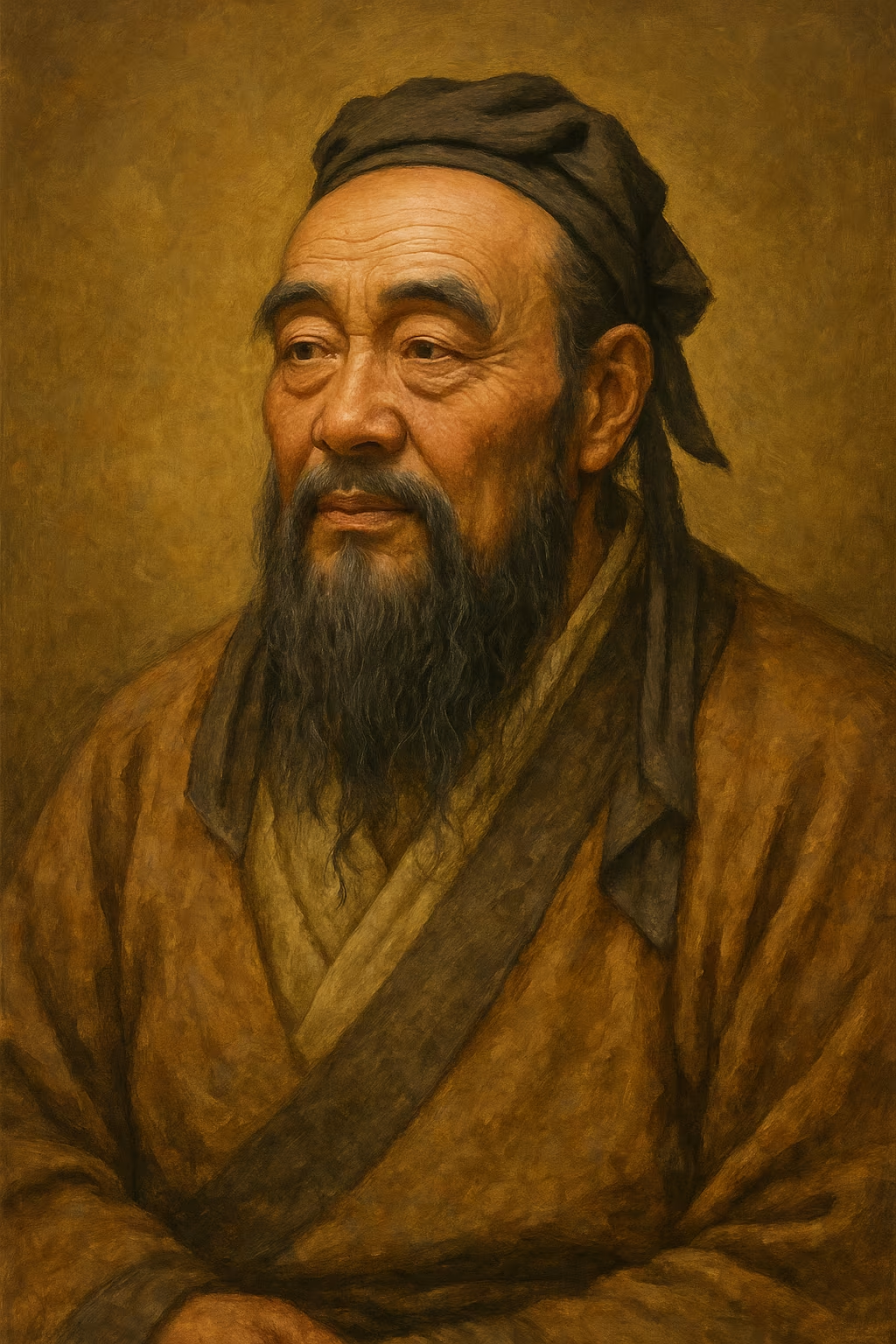
Confucius
Chinese philosopher, educator, and official of the State of Lu
Genghis Khan
Founder of the Mongol Empire and Eurasian conqueror
Specialized Sites
Batailles de France
Discover battles related to this figure
Dynasties Legacy
In preparationFuture site on royal and noble lineages (not available yet)
Timeline France
In preparationFuture chronological timeline site (not available yet)