analysis 12 min read
Who Held the Pen: History Written by Its Own Actors
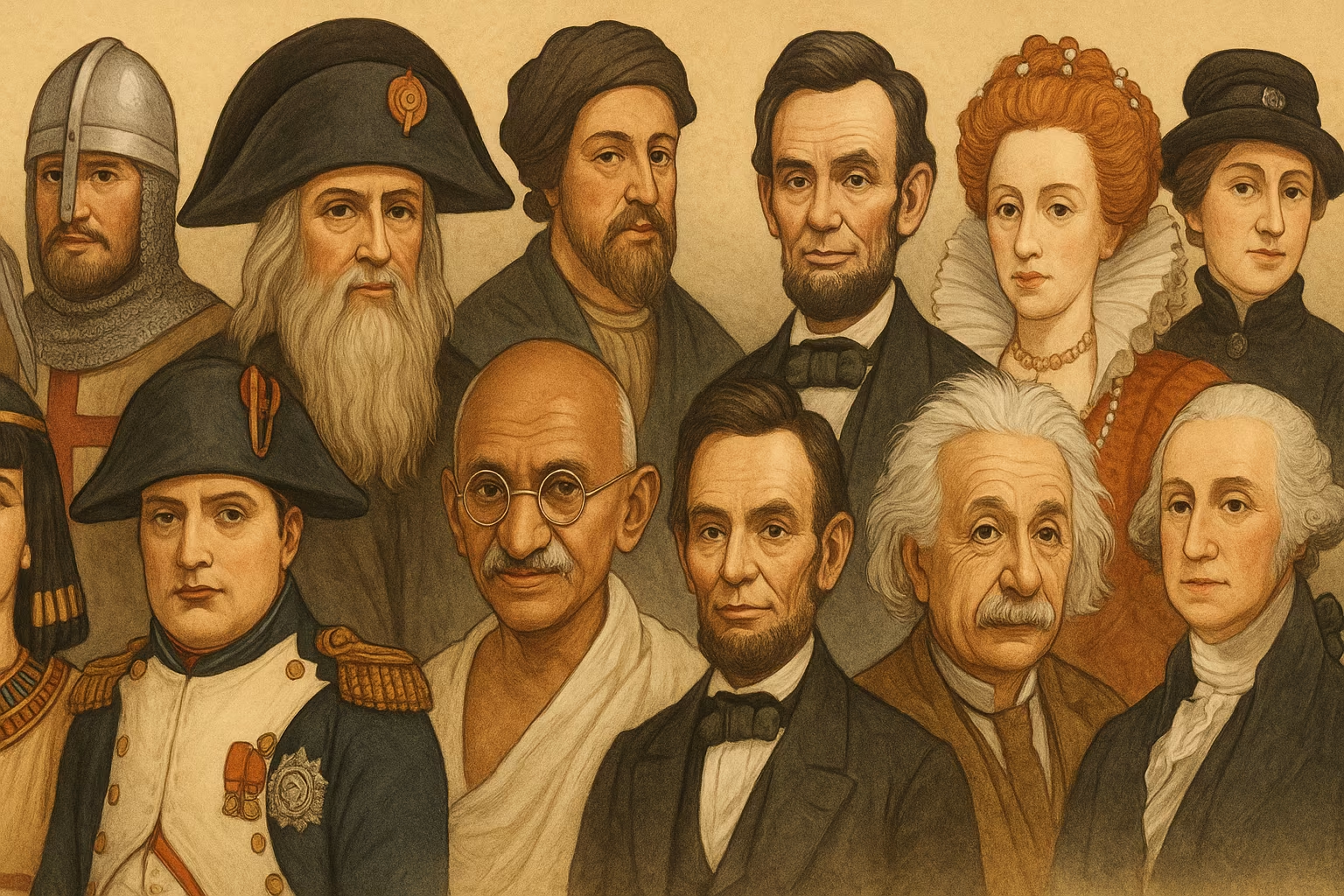
Augustine told his conversion eleven years later, Napoleon dictated his under guard. Eight lives we know largely through a text their subject controlled.
By Historic Figures
HistoricFigures is a digital encyclopedia dedicated to the in-depth exploration of the figures who have shaped world history. Our mission is to make history accessible to everyone by providing detailed biographies, rigorous historical analyses, and quality editorial content.
Each historical figure presented on our site is the subject of in-depth research from multiple and verified sources. We strive to present not only established historical facts, but also contextual analyses that allow for a better understanding of the impact and legacy of these exceptional figures.
Our approach consists of interconnecting biographies with our specialized site Batailles de France, offering a broader vision of history where figures, events, and contexts naturally intertwine for a complete understanding of the past. Other thematic sites are in preparation.
The study of historical figures offers us much more than a simple collection of dates and events. It allows us to understand the mechanisms that have shaped our contemporary world, to grasp the human motivations that transcend eras, and to appreciate the complexity of decisions that have determined the course of humanity. Each biography we present is a window opened onto an era, a society, and a worldview that continues to influence our present.
Through our comparative analyses, thematic articles, and methodological guides, we explore the subtle links that unite the great figures of history. How did Napoleon draw inspiration from Alexander the Great? Why do some figures become legends while others fall into oblivion? What are the mechanisms that transform an individual into a historical symbol? These questions, and many others, find answers in our in-depth editorial content.
Each biography published on HistoricFigures results from a rigorous process of research and verification. We consult primary sources (period documents, correspondence, archives), quality secondary sources (works by recognized historians, academic articles), and we systematically cross-reference information to ensure its accuracy. Our team of contributors, composed of historians and passionate researchers, is committed to maintaining the highest standards of historical rigor while making content accessible to the general public.
We firmly believe that history must be presented in a balanced manner, exposing different viewpoints and clearly distinguishing established facts from interpretations or legends. This critical and nuanced approach allows our readers to develop their own understanding of historical figures and their legacy.
Enrichment of figure pages with unique editorial sections
Addition of "Historical Analysis", "Debates and Controversies", "Legends and Reality" and "Modern Influence" sections on the pages of the most important figures.
Publication of new methodological guides
Addition of complete guides on studying history and understanding historical periods.
Homepage enrichment
Addition of substantial editorial content, "Editorial of the Month" section and enriched FAQ with 10 detailed questions.
September 2026
In this era where information circulates at a dizzying speed, the study of historical figures offers us a precious anchor in understanding our humanity. Each biography we explore reveals not only the events that marked an era, but also the deep motivations, ethical dilemmas, and choices that shaped the world as we know it today.
This month, we focus on the importance of historical contextualization. Understanding a historical figure is not limited to memorizing dates or facts. It is about grasping the issues of their time, the social and political constraints they faced, and the alternatives available to them. This nuanced approach allows us to avoid anachronistic judgments and truly appreciate the complexity of historical decisions.
Through our comparative analysis articles, we explore how the great figures of history inspired each other, how their strategies adapted to their context, and how their legacy continues to influence our present. This ongoing exploration of history is not only academic—it helps us better understand contemporary challenges and envision the future with a perspective informed by the lessons of the past.
Discover our in-depth analyses and editorial articles on history
Augustine told his conversion eleven years later, Napoleon dictated his under guard. Eight lives we know largely through a text their subject controlled.
By Historic Figures
Abu Simbel still stands, Pericles' empire does not. Seven reigns put to one test: twenty years after the ruler dies, what is still working without him?
By Historic Figures
Hugo wrote Les Misérables on Guernsey, Marx wrote Capital in London, de Gaulle spoke from the BBC. What banishment actually produces, case by case.
By Historic Figures
Search among our biographies of historical figures who shaped our world. Each biography is enriched with detailed timelines and interactive maps for complete exploration.
Searching...
💡 Tip: Use category or period filters to discover figures by field of influence or historical era.
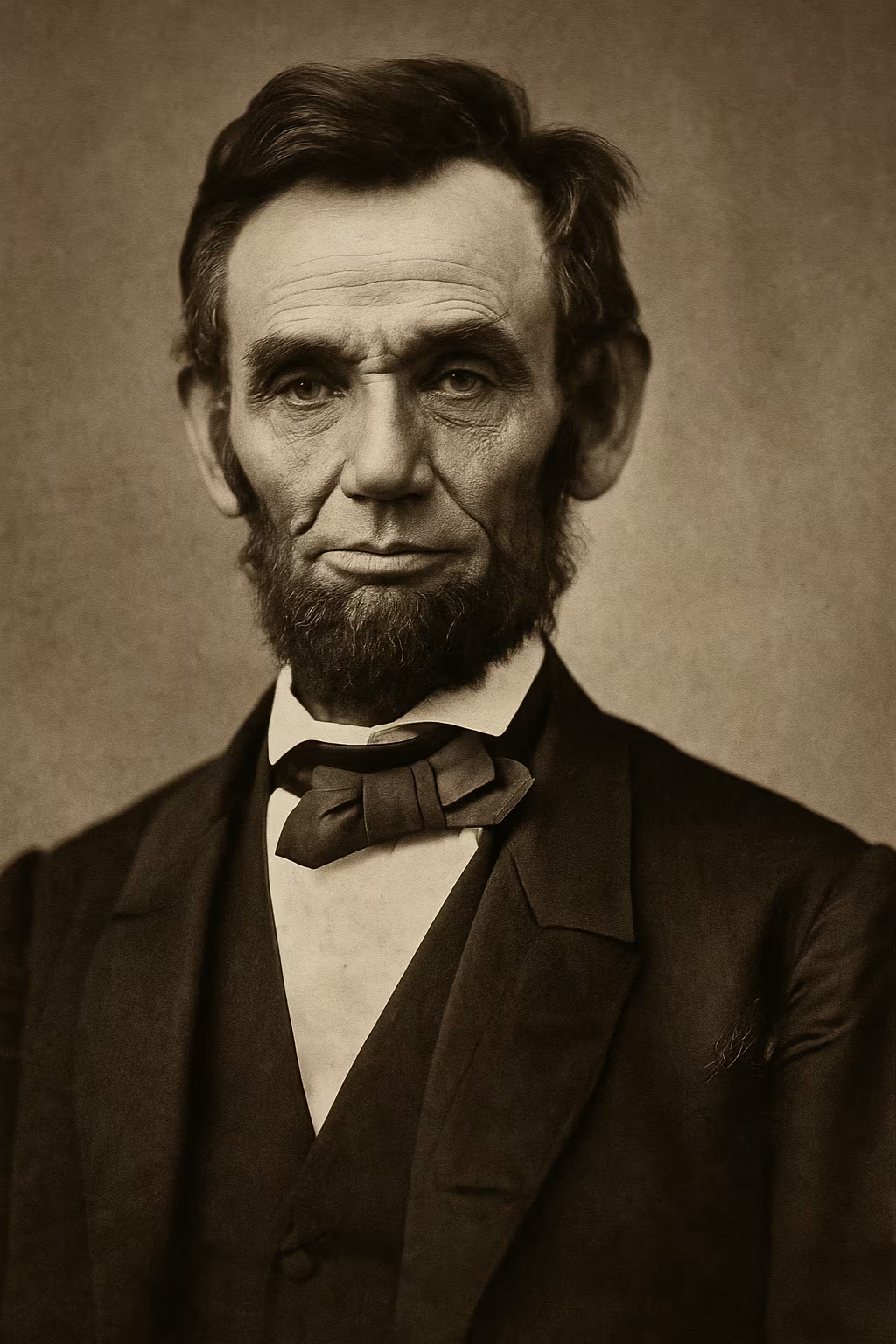
16th President of the United States; Union leader during the Civil War; architect of slavery’s abolition
Abraham Lincoln (1809–1865), the 16th U.S. President, led the Union through the Civil War, issued the Emancipation Proclamation (1863) against slavery in rebelling states, and championed the 13th Amendment abolishing slavery nationwide. Reelected in 1864, he was assassinated in April 1865, shortly after the Union’s victory. His addresses—especially the Gettysburg Address—and crisis leadership made him a central figure of American democracy.

Mathematician and pioneer of nineteenth-century programming
Ada Lovelace (1815 – 1852) was a British mathematician whose work on Charles Babbage's Analytical Engine opened the way to computer programming. Educated within an exacting intellectual milieu, she fused mathematics, music, and scientific imagination to envision mechanical computation. Her notes on the Analytical Engine, published in 1843, include what is considered the first algorithm intended for machine execution and a pioneering reflection on symbolic manipulation beyond numerical calculation.
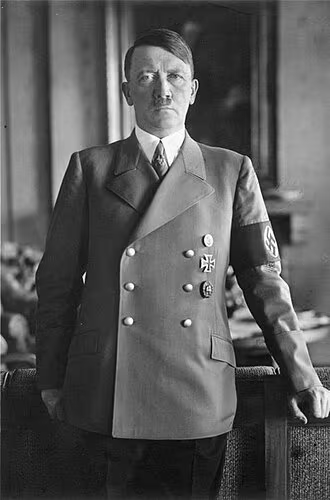
Leader of the National Socialist Party and dictator of Nazi Germany (1889–1945)
Adolf Hitler (1889–1945) was the leader of the National Socialist German Workers' Party (NSDAP) and Chancellor of Germany from 1933 to 1945. He established a totalitarian dictatorship responsible for the Second World War and the Holocaust. His racist, antisemitic, and expansionist ideology caused the deaths of tens of millions of people and left Europe in ruins.
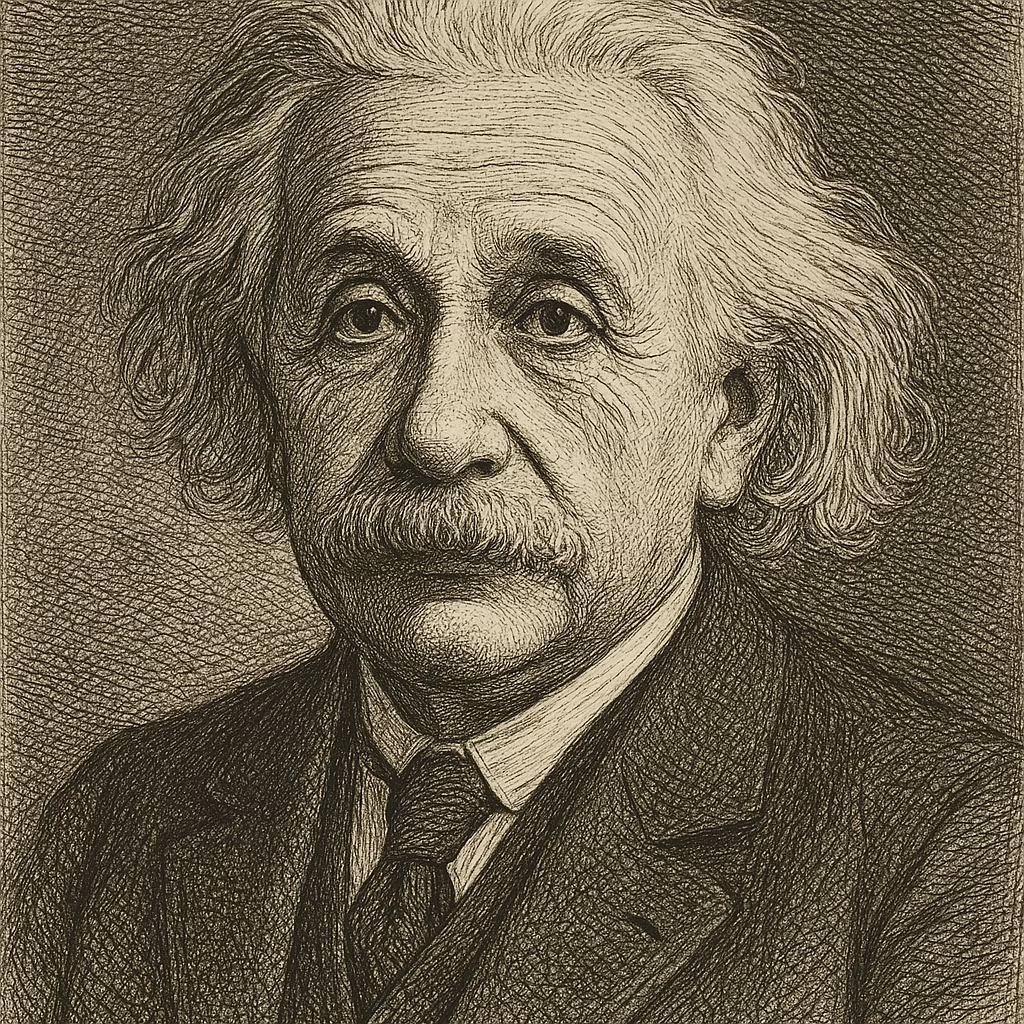
Theoretical Physicist
Albert Einstein (1879–1955) reshaped modern physics. His works on special (1905) and general relativity (1915), the photoelectric effect, Brownian motion, mass–energy equivalence (E = mc²), and quantum statistics (Bose–Einstein) transformed science and our concept of nature. Awarded the 1921 Nobel Prize in Physics (conferred in 1922) for explaining the photoelectric effect, he was also an engaged public intellectual on peace, civil rights, and scientific responsibility.
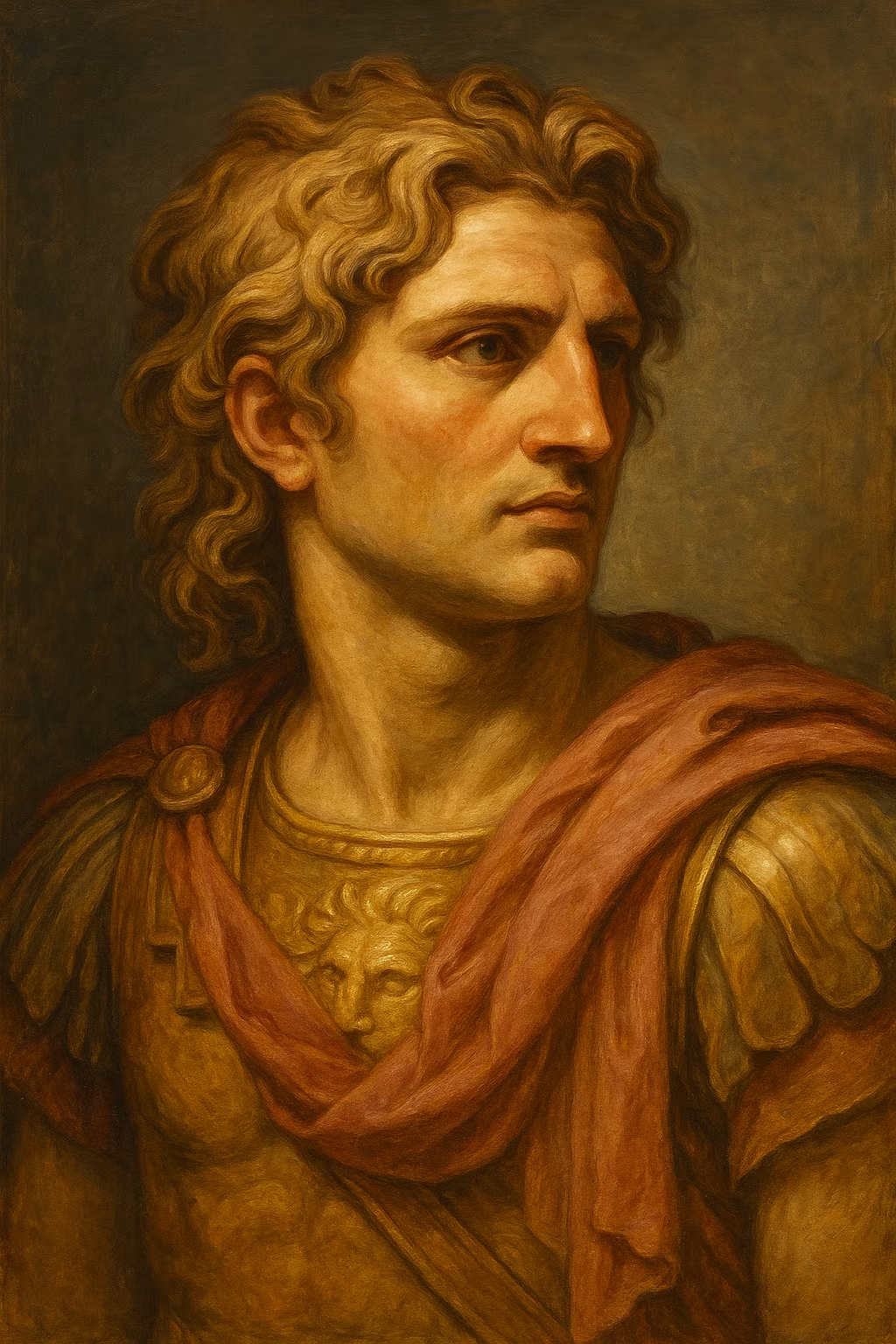
King of Macedon, Hegemon of the Greeks, Pharaoh of Egypt, King of Asia (336–323 BCE)
Alexander III of Macedon (Alexander the Great) was one of antiquity’s most brilliant commanders. Heir to Philip II and student of Aristotle, he led a decade-long lightning campaign that toppled the Achaemenid Empire, founded cities (notably Alexandria), and projected Hellenic culture from the Mediterranean to the Indus.

Founder of Buddhism and sixth-century BCE spiritual master
Siddhartha Gautama (c. 563 – c. 483 BCE), better known as the Buddha, awakened at Bodh Gaya and inaugurated the Buddhist tradition. His teaching on the Four Noble Truths, the Middle Way, and impermanence reshaped South and East Asian cultures before spreading worldwide. For forty-five years he traveled the Ganges plain, organized the monastic Saṅgha under the Vinaya, and inspired philosophical, ethical, and meditative currents that endure today.
Discover figures by their field of influence.
Travel through the eras of history.
Explore the birthplaces and lives of great historical figures on our interactive map.
View Interactive MapWe select figures based on their historical impact, their influence on their era, and their lasting legacy. Each biography is the subject of in-depth research from verified historical sources and works by recognized historians.
Our selection process takes into account several criteria: the importance of the figure in their historical context, the availability of reliable sources, relevance for understanding a period or movement, and requests from our readers. We prioritize geographical, temporal, and thematic diversity to offer a complete vision of world history.
Our methodology is based on four pillars: in-depth research from primary and secondary sources, rigorous fact-checking, historical contextualization, and regular revision to integrate the latest research. Each biography indicates its last update date.
For each figure, we consult at least three independent sources and systematically verify dates, major events, and citations. We clearly distinguish established facts from legends or controversial interpretations. Our team of contributors includes professional historians who guarantee the academic quality of our content.
Our editorial articles delve into specific aspects of historical figures or explore cross-cutting themes. Each article is linked to the relevant biographies via internal links, allowing smooth navigation between content for a complete understanding of history.
We create comparative analysis articles (such as "Napoleon vs Alexander the Great"), thematic articles (such as "Women of Power in History"), and methodological guides (such as "How to Study History"). These articles enrich biographies by offering multiple perspectives and in-depth analyses that go beyond the simple factual narrative.
HistoricFigures is designed to be a complete resource for all levels, from students to established researchers. Each biography includes a detailed timeline, a list of major achievements, and links to our in-depth analysis articles.
For effective research, we recommend starting with the biography of the figure that interests you, then exploring the editorial articles linked to it. Use our interactive map to discover figures by geographical region, and our filters by period or category to explore specific themes. Each page also includes a selective bibliography to deepen your research.
Yes, we regularly review our content to integrate the latest historical research and correct any errors that may be identified. Each biography and article indicates its last update date.
History is a living discipline, and new archaeological discoveries, new archival documents, or new interpretations regularly emerge. Our team actively follows academic publications and historical discoveries to keep our content up to date. If you identify an error or wish to suggest an improvement, please do not hesitate to contact us.
HistoricFigures stands out for its interconnected approach and in-depth editorial content. Unlike traditional encyclopedias that primarily present facts, we offer comparative analyses, multiple perspectives, and methodological guides.
Our network of specialized sites (Batailles de France, Dynasties Legacy, Timeline France) allows for a holistic exploration of history where figures, events, and contexts naturally intertwine. We also prioritize accessibility by offering our content in multiple languages and using clear language without sacrificing historical rigor.
We welcome contributions from researchers, historians, and history enthusiasts who wish to enrich our encyclopedia. Each contribution is subject to a rigorous review process to ensure the quality and accuracy of information.
If you are interested in contributing, you can contact us through our contact page. We are particularly looking for contributors specialized in specific periods or regions, as well as authors for our in-depth analysis articles. All contributions must respect our standards of historical rigor and editorial quality.
Yes, we believe that a balanced presentation of history must include different viewpoints and historiographical debates. For controversial figures, we present different interpretations and arguments from each side.
For example, for Napoleon, we explore both his vision as a national hero and as an imperialist conqueror. For Joan of Arc, we present different interpretations of her mission and impact. This nuanced approach allows readers to develop their own critical understanding of history.
Our interactive map allows you to visualize historical figures geographically, discover the birthplaces and regions of influence of each figure, and explore spatial connections between different figures.
The map is particularly useful for understanding historical migrations, empires and their borders, and cultural centers across eras. You can filter by period, category, or search for a specific figure. Each marker on the map is clickable and takes you directly to the complete biography of the figure.
We regularly publish new editorial articles, enrich existing biographies, and add new figures to our encyclopedia. Our goal is to maintain a regular publication pace to always offer more quality content to our readers.
You can follow our latest publications in the "Latest Articles" section of our homepage. We generally publish several articles per month, covering comparative analyses, thematic articles, and methodological guides. Each new content is carefully researched, written, and reviewed before publication.
HistoricFigures is complemented by the specialized site Batailles de France to offer a more complete vision of history. Other thematic sites are in preparation and will enrich this network.
Discover the great battles of French history with detailed maps and analyses.
A future site dedicated to French royal and noble dynasties. This project is not available yet.
A future site of interactive chronological timelines. This project is not available yet.
Select the categories you want to allow.