Akbar (1542 – 1605)
Quick Summary
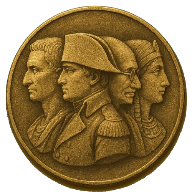
Akbar (1542 – 1605) was a emperor and major figure in history. Born in Umarkot, Sindh (present-day Pakistan), Akbar left a lasting impact through Restoration of the Mughal Empire after Panipat (1556) and expansion from Kabul to the Bay of Bengal.
Birth
October 15, 1542 Umarkot, Sindh (present-day Pakistan)
Death
October 27, 1605 Agra, Mughal Empire (present-day India)
Nationality
Mughal
Occupations
Complete Biography
A Child Born In Flight
Akbar was born on 15 October 1542 at Umarkot, a Rajput desert fort in Sindh, at the lowest point in his family's fortunes. His father Humayun, son of Babur, had lost Hindustan two years earlier to Sher Shah Suri at Chausa and then Kannauj, and was fleeing west with a shrunken escort. The infant was left behind in the care of his paternal uncles at Kandahar and then Kabul, while Humayun went to the Safavid court to beg for troops. Akbar rejoined his father only in 1545, and grew up in a princely household where the bow, the horse and the elephant were handled far more readily than the pen: despite the tutors imposed on him, he never learned to read. Humayun retook Delhi in the summer of 1555 and died in January 1556, having fallen from his library staircase. Akbar was thirteen, on campaign in the Punjab, and inherited a kingdom that amounted to a handful of garrisons.
Thirteen Years Old And A Throne To Retake
He was enthroned on 14 February 1556 at Kalanaur, on an improvised platform, under the regency of Bairam Khan. Months later Hemu, general of the Sur claimant, took Delhi and Agra and proclaimed himself sovereign. Against advisers who urged a retreat to Kabul, Bairam Khan marched: at Panipat on 5 November 1556 Hemu was struck in the face by an arrow, captured and killed, and both capitals returned to Mughal hands. What followed was an apprenticeship in personal rule. In 1560 Akbar removed Bairam Khan, who had become an obstacle; the former regent left for Mecca and was assassinated in Gujarat the following year. In 1562, when Adham Khan, son of his wet-nurse, stabbed the chief minister Ataga Khan inside the palace, Akbar had him thrown from the ramparts. At nineteen he governed alone. He abolished the pilgrim tax in 1563, the jizya on non-Muslims in 1564, and forbade the enslavement of defeated families.
The Rajputs Between Alliance And Massacre
Akbar's Rajput policy consists of two contradictory gestures, and they have to be held together. In 1562 he married the daughter of Raja Bharmal of Amber: the princess — whom late legend would call Jodha Bai, with no support in the sources — was not required to convert, and her father, her brother and her nephew Man Singh entered imperial service, where they would command armies. The pattern repeated from one Rajput house to the next: a marriage alliance meant incorporation, not submission. But Chittorgarh, besieged from October 1567 to February 1568, shows the other face. Once the fort fell, Akbar ordered the population massacred: Abu'l-Fazl, his own chronicler, gives the figure of thirty thousand dead. Ranthambore and Kalinjar yielded in 1569. Mewar did not: at Haldighati on 18 June 1576 Man Singh's imperial army won the field, but Rana Pratap escaped and resisted until his death in 1597.
An Empire From Kabul To Bengal
Expansion followed a logic of resources as much as prestige. Gujarat, conquered in 1572-73 with the siege of Surat, gave the empire its first ports on the Arabian Sea: the Hajj route, Indian Ocean trade and the customs revenue that came with them. The Buland Darwaza at Fatehpur Sikri commemorates that campaign. Bengal followed, after the battle of Tukaroi in 1575 and annexation in 1576, with its rice fields and its textiles. In 1581 Akbar marched on Kabul against his half-brother Mirza Hakim; on Hakim's death in 1585 the city entered the empire. Kashmir was annexed in 1586, Sindh in 1591, Orissa in 1592, and Kandahar in 1595, surrendered by its Safavid governor. The final years were taken up by the Deccan: Ahmadnagar was besieged in 1595-96, Asirgarh fell in January 1601, and Khandesh and Berar were annexed. The empire then ran from Kabul to the Bay of Bengal.
The Mansab And The Land Revenue
What sets Akbar apart from the conquerors who preceded him in northern India is the apparatus he left behind. Officers held a mansab, a numbered rank, expressed from the 1590s in two figures: the zat, which fixed the salary, and the sawar, the number of horsemen to maintain. They were paid by assignment of a district's revenue, the jagir, not by hereditary land, and those assignments were moved regularly — which prevented local dynasties from forming. On the revenue side, after costly experiments, the dahsala settlement of 1580, directed by Raja Todar Mal, fixed the state's demand at roughly a third of the crop, calculated from ten-year averages of yields and prices, assessed in cash per bigha on a schedule specific to each locality. Abu'l-Fazl's Ain-i-Akbari, completed in 1598, records the detail: no sixteenth-century state described itself with such precision.
The Ibadat Khana And Sulh I Kull
In 1575 Akbar had an Ibadat Khana, a 'house of worship', built at Fatehpur Sikri, at first reserved for Sunni scholars. The disputes there turned so badly that from 1578 he opened the hall to Shias, Sufis, brahmins, the Jain master Hiravijaya Suri, the Zoroastrian dastur Meherji Rana, and then to the Jesuits who came from Goa in 1580, Rodolfo Acquaviva and Antonio Monserrate. In 1579 a mahzar drafted by Shaikh Mubarak and signed by the leading ulama granted him the right to arbitrate between conflicting legal opinions: the break with the religious establishment was complete, and a revolt backed by a fatwa broke out in Bengal and Bihar in 1580-81. From 1582 a few dozen intimates bound themselves to the emperor through what his contemporaries called tawhid-i ilahi. The phrase 'Din-i Ilahi' and the notion of a new religion are later readings, still debated by historians; the governing principle, however, is named: sulh-i kull, universal concord.
An Illiterate Emperor And His Atelier
Akbar could not read, and it hindered nothing: texts were read aloud to him daily, and his chroniclers put his library at more than twenty thousand volumes. His translation bureau, the maktab khana, rendered the Mahabharata into Persian — the Razmnama, between 1582 and 1586 — along with the Ramayana, whose translation was forced on Badauni, who loathed it and said so in his own chronicle, and Babur's Turkish memoirs, put into Persian by Abdul Rahim in 1589. The painting atelier produced the Hamzanama, some fourteen hundred large compositions on cloth of which roughly two hundred survive: Persian composition, Indian colour, and perspective learned from engravings brought by the Jesuits. Tansen sang at court from 1562. Fatehpur Sikri was built in red sandstone from 1571 — mosque, tomb of Salim Chishti, Buland Darwaza, the central pillar of the Diwan-i Khas — then abandoned around 1585 when the court left for Lahore.
The Succession And The Death At Agra
The end of the reign was a family matter. Of the three sons who reached manhood, Murad died in 1599 and Daniyal in 1605, both of drink; Salim, born in 1569, revolted against his father from 1600 and had Abu'l-Fazl assassinated in 1602, killed on the road by Bir Singh Deo Bundela. Father and son reconciled late, and badly. Akbar died at Agra on 27 October 1605 after dysentery, at the end of a forty-nine-year reign; he was buried at Sikandra in a mausoleum completed under Jahangir, the regnal name Salim took. What he left was not merely a frontier: it was a composite state whose revenue base would still serve as a reference for British administrators, and a doctrine of concord that contemporary India invokes or contradicts depending on the camp. Chittorgarh and the Deccan remain in the file: the same reign carries the Ibadat Khana and a massacre.
Achievements and Legacy
Major Achievements
- Restoration of the Mughal Empire after Panipat (1556) and expansion from Kabul to the Bay of Bengal
- Abolition of the pilgrim tax (1563) and of the jizya on non-Muslims (1564)
- Integration of Rajput houses into the imperial nobility by alliance rather than conversion
- Creation of the mansab system, numbered ranks separating command from landholding
- The dahsala revenue settlement of 1580, basis of Indian agrarian assessment for three centuries
- Opening of the Ibadat Khana (1575) and a policy of universal concord, sulh-i kull
- Imperial ateliers of painting and translation: Hamzanama, Razmnama, Baburnama in Persian
Historical Legacy
Akbar left less a frontier than a machine of state. The mansab, which separated rank from land, and the dahsala settlement of 1580, which based taxation on averages of yields and prices, held the Mughal Empire together for a century and a half and still served as a reference for eighteenth-century British administrators. The Ain-i-Akbari preserves the numbers, which makes the reign one of the best documented in sixteenth-century Asia. His policy of universal concord, sulh-i kull, is now a political question in India: invoked as an indigenous root of secularism, contested by nationalist historiography. The file is double, and it has to be read whole: the sovereign who opened the Ibadat Khana to brahmins, Jains and Jesuits is also the one who had Chittorgarh massacred in 1568.
Detailed Timeline
Major Events
Born at Umarkot
15 October, in Sindh, during his father Humayun's flight.
Enthroned at Kalanaur
14 February, aged thirteen, under the regency of Bairam Khan.
Second battle of Panipat
5 November: Hemu is defeated and Delhi and Agra return to the Mughals.
Dismissal of Bairam Khan
Akbar takes personal power; the regent is assassinated the following year.
Abolition of the jizya
The tax on non-Muslims is ended, after the pilgrim tax in 1563.
Fall of Chittorgarh
February: the Rajput fort falls, followed by the massacre of its inhabitants.
Conquest of Gujarat
The empire reaches the Arabian Sea; the Buland Darwaza commemorates the campaign.
Opening of the Ibadat Khana
A hall of religious debate at Fatehpur Sikri, widened to other faiths from 1578.
Mahzar of the ulama
Akbar obtains the right to arbitrate between conflicting legal opinions.
Dahsala settlement
Todar Mal fixes the land tax on ten-year averages of yields and prices.
Annexation of Kashmir
Followed by Sindh in 1591, Orissa in 1592 and Kandahar in 1595.
Ain-i-Akbari completed
Abu'l-Fazl records the administration, revenues and usages of the empire.
Capture of Asirgarh
January: Khandesh and Berar are annexed at the close of the Deccan campaigns.
Died at Agra
27 October, after a forty-nine-year reign; entombed at Sikandra.
Geographic Timeline
Famous Quotes
“Formerly I persecuted men into conformity with my faith and deemed it Islam. As knowledge came to me, shame overwhelmed me.” — words attributed to Akbar in the collection of sayings Abu'l-Fazl places at the end of the Ain-i-Akbari.
“Jesus, son of Mary, said: the world is a bridge, pass over it, but build no house upon it.” — inscription Akbar had carved on the Buland Darwaza at Fatehpur Sikri after the conquest of Gujarat.
External Links
Frequently Asked Questions
Who was Akbar?
Akbar (1542-1605) was the third Mughal emperor and Babur's grandson. Crowned at thirteen in 1556, he reigned for forty-nine years, carried the empire from Kabul to the Bay of Bengal, and built the fiscal and military apparatus that held the Mughal state together long after him.
When was Akbar born and when did he die?
Born on 15 October 1542 at Umarkot in Sindh, during his father Humayun's flight; died at Agra on 27 October 1605, aged sixty-three. He is buried at Sikandra near Agra, in a mausoleum completed during the reign of his son Jahangir.
What was the Din-i Ilahi?
From 1582 a few dozen intimates bound themselves personally to the emperor through what contemporaries called tawhid-i ilahi. The name 'Din-i Ilahi' and the idea of a new religion come from later authors; historians still debate whether it is best read as a religion, a court order or an oath of loyalty.
Could Akbar read?
No. Despite the tutors of his childhood he never learned to read. Texts were read aloud to him, and he maintained a library his chroniclers put at more than twenty thousand volumes, along with a bureau translating Sanskrit and Turkish works into Persian.
Why was Fatehpur Sikri abandoned?
The court left for Lahore around 1585, from where Akbar watched the north-western frontier. An inadequate water supply is the explanation most often advanced, but it remains disputed: the move answered a military necessity first, and the capital was never re-established at Sikri.
Sources and Bibliography
Primary Sources
- Abû'l-Fazl 'Allâmî, Akbarnâma
- Abû'l-Fazl 'Allâmî, Âîn-i Akbarî
- 'Abd al-Qâdir Badâ'ûnî, Muntakhab al-Tawârîkh
- Antonio Monserrate, Mongolicae Legationis Commentarius
Secondary Sources
- John F. Richards, The Mughal Empire (The New Cambridge History of India)
- Irfan Habib, The Agrarian System of Mughal India, 1556-1707
- Ira Mukhoty, Akbar: The Great Mughal
External References
See Also
Related Figures
Catherine II of Russia
Empress and Autocrat of All the Russias
Genghis Khan
Founder of the Mongol Empire and Eurasian conqueror
Ibn Khaldun
Historian, jurist, and pioneer of sociology in the 14th century
Louis XIV
King of France and Navarre
Specialized Sites
Batailles de France
Discover battles related to this figure
Dynasties Legacy
In preparationFuture site on royal and noble lineages (not available yet)
Timeline France
In preparationFuture chronological timeline site (not available yet)