Hannibal Barca (247 – c. 183 BC)
Quick Summary
Hannibal Barca (247 – c. 183 BC) was a general and major figure in history. Born in Carthage, North Africa (present-day Tunisia), Hannibal Barca left a lasting impact through Command of the Carthaginian army of Iberia at twenty-six (221 BC).
Birth
248 BC Carthage, North Africa (present-day Tunisia)
Death
184 BC Libyssa, Bithynia (present-day Turkey)
Nationality
Carthaginian (Punic)
Occupations
Complete Biography
A Childhood Inside The Punic Wars
Hannibal was born in 247 BC at Carthage, in the sixth year of a war his city was losing. His father, Hamilcar Barca, then commanded the last Punic positions in Sicily; he held Mount Eryx until the naval defeat at the Aegates Islands in 241 forced Carthage to come to terms. Peace cost Sicily and a crushing indemnity, and then — while Hamilcar was putting down the mercenary revolt — Sardinia, seized by Rome at the height of the crisis. Hannibal grew up in that household: the house of a loser who would not accept the verdict. In 237 Hamilcar left to conquer Iberia and rebuild Carthage's resources, taking his nine-year-old son with him. Polybius reports the scene of the oath: at the altar the boy swore never to be a friend of Rome. The historian names his source — Hannibal himself, telling the story to Antiochus III half a century later. The account is therefore unverifiable, but it is not idle: it tells us what the man wanted remembered about him. Of his Iberian years little is known: a military apprenticeship among mercenary armies, and Greek learned from the Spartan Sosylus, who followed him for life and wrote a history of his campaigns, now lost.
Command In Iberia
Hamilcar died in battle in 229 or 228. His son-in-law Hasdrubal succeeded him, founded New Carthage and preferred diplomacy to conquest: it was he who concluded the Ebro agreement with Rome around 226, fixing the river as the limit of Punic expansion. When he was assassinated in 221, the army acclaimed Hannibal, then twenty-six; Carthage ratified the choice. Two campaigns sufficed to subdue the interior plateau — Olcades, Vaccaei, Carpetani — and to show that he could manoeuvre: on the Tagus he let the enemy commit to the river, then charged them as they came out of the water. That left Saguntum, a coastal city tied to Rome but lying south of the Ebro. Hannibal besieged it in 219 and took it after eight months. Rome sent an embassy to Carthage demanding he be handed over; the Punic senate refused; war was declared in the spring of 218. Historians still argue over who wanted the war. Polybius saw it as the outcome of a long-prepared Barcid policy; others point out that Rome had accepted an alliance with Saguntum against the spirit of the treaty. What is certain is that Hannibal chose the moment, the pretext and the theatre.
The March On Italy And The Alps
The Second Punic War opened with a rare strategic decision: to carry the war to the enemy rather than wait for him. Carthage no longer had a fleet able to contest the sea, so Hannibal took the land route. He left New Carthage in the spring of 218 with, according to Polybius, close to 90,000 foot and 12,000 horse, left garrisons in Iberia, crossed the Pyrenees, forded the Rhône in September — the elephants went over on rafts covered with earth — and slipped past the army of the consul Publius Cornelius Scipio, who was looking for him at the river mouth. The crossing of the Alps took about a fortnight, at the onset of winter. The exact route is still debated: neither Polybius, who claims to have retraced it, nor Livy allows a choice among the candidate passes. Losses were enormous: rockfalls, ambushes by Alpine tribes, cold. Hannibal emerged into northern Italy with 20,000 foot and 6,000 horse, under a quarter of the force that had left Iberia. The story of vinegar poured on heated rock comes from Livy; Polybius does not mention it. Of the thirty-seven elephants that set out, almost none survived the first Italian winter.
Trebia Trasimene Cannae
In three campaigns Hannibal inflicted on Rome the worst defeats in its history. At the Trebia, in December 218, he had the Roman camp harassed at dawn, drew Sempronius Longus out unfed across an icy river, then sprang the ambush laid by his brother Mago in a streambed. In June 217, at Lake Trasimene, he placed his army on the heights of a defile and waited for the consul Flaminius's column in the mist: some 15,000 Romans died, the consul among them. On 2 August 216, at Cannae in Apulia, he formed a convex centre of Gauls and Iberians, deliberately weak, flanked by African infantry held back on either side. The legions drove into the centre, which gave ground without breaking; the African infantry closed on the flanks while the heavy cavalry, having swept away its opposite number, came back to seal the rear. The Roman army, the largest yet assembled, was surrounded and destroyed: Polybius counts 70,000 dead, Livy 48,200. The consul Aemilius Paullus was killed. The double envelopment at Cannae has been studied ever since as the battle of annihilation in its purest form.
The War That Bogged Down In Italy
After Cannae, Rome did not capitulate. That is the most important fact of the war, and the one Hannibal had not allowed for. His strategy rested on breaking up the Italian confederation: Capua, Tarentum and part of the south did come over to him, but the Latin colonies and central Italy held. Maharbal, in Livy, is said to have reproached him for not marching on Rome: 'You know how to win a victory, Hannibal, but not how to use one.' The phrase has stuck; it ignores that an army with no siege train and no port base would not have taken the city. Rome then adopted the method of Fabius Maximus: refuse pitched battle, harass, retake the towns one by one. Hannibal stayed fifteen years in Italy without decisive reinforcement, the Carthaginian senate preferring to defend Iberia and Sicily. In 212-211 Capua was retaken despite a diversionary march on Rome that survives in the phrase Hannibal ad portas. In 207 his brother Hasdrubal, who had come from Iberia by the same Alpine road, was intercepted and killed at the Metaurus before they could join forces. From then on Hannibal held out in Bruttium, but could no longer win.
The Return To Africa And Zama
While he marked time in southern Italy, the war was being decided elsewhere. Publius Cornelius Scipio, son of the consul beaten in 218, took New Carthage in 209, drove the Carthaginians out of Iberia in 206, then landed in Africa in 204. His success was as much diplomatic as military: he won over the Numidian prince Masinissa, and so deprived Carthage of the cavalry that had won Cannae. Recalled in 203, Hannibal left Italy after sixteen years. The encounter came in October 202 near Zama, whose exact site has still not been identified. He drew up three successive lines and eighty elephants; Scipio opened lanes in his formation to let the charge through and neutralised it. The two infantries wore each other down, and then Masinissa's Numidian cavalry, returning from the pursuit, fell on the Punic rear. For the first time, Hannibal was on the receiving end of envelopment. The peace of 201 left Carthage without a war fleet, without possessions outside Africa, owing 10,000 talents over fifty years and forbidden to make war without Rome's consent. Hannibal himself was neither surrendered nor exiled.
The Sufeteship And The Reform Of Carthage
The least known part of his career is also the part that best shows the statesman. Elected suffete — Carthage's supreme magistracy — in 196, he went after the oligarchy rather than Rome. The court of the Hundred and Four, co-opted for life, controlled the magistrates and had the city locked up; Hannibal had its members made annually elective and barred from serving two years running. He then cleaned up public finance. Livy records that by pursuing diverted revenues and reorganising collection he made Carthage able to pay the war indemnity without levying any new tax. The demonstration was awkward for everyone: a defeated city, looted by its own notables, became solvent again in a few years. The ousted notables warned Rome that Hannibal was in correspondence with Antiochus III; Scipio is said to have opposed the move, but a Roman commission set out for Carthage all the same in 195. Hannibal did not wait: he rode by night to a port on the eastern coast and took ship. He never saw his city again; it was razed half a century later.
Exile And Death In Bithynia
He found refuge at Ephesus with Antiochus III, who was preparing war against Rome. The Seleucid king gave him little hearing: he refused the army Hannibal asked for to reopen a front in Italy and confined him to a naval command. In 190, beaten by the Rhodian fleet off Side, Hannibal counted for nothing; Antiochus was crushed at Magnesia the same year, and the peace of Apamea provided for his surrender. He fled again: Crete, perhaps Armenia, then the Bithynia of Prusias I, for whom he commanded against Eumenes II of Pergamon — the episode of jars of snakes hurled onto the enemy decks is reported by Cornelius Nepos. Around 183 Rome sent Titus Quinctius Flamininus to demand he be given up; Prusias yielded and had the house at Libyssa surrounded. Hannibal took the poison he kept in a ring. Livy gives him these words: let us relieve the Romans of a long anxiety, since they find it too long to wait for an old man's death. He was about sixty-four, and Rome still feared him although he had had no army for thirteen years.
Achievements and Legacy
Major Achievements
- Command of the Carthaginian army of Iberia at twenty-six (221 BC)
- Crossing of the Pyrenees, the Rhône and the Alps with an army and its elephants (218 BC)
- Victories at the Trebia (218), Lake Trasimene (217) and Cannae (216 BC)
- The double envelopment at Cannae, still studied as the model battle of annihilation
- Keeping a field army in Italy for fifteen years without decisive reinforcement from Carthage
- Reform of the court of the Hundred and Four and of Punic public finance as suffete (196 BC)
Historical Legacy
Hannibal is the only enemy from whom Rome drew a doctrine: the refusal of pitched battle inherited from Fabius Maximus, the attention paid to cavalry, the hunt for Numidian alliances all come out of the war he fought. But it is Rome that wrote him down. The Carthaginian histories of his campaigns, by Sosylus and by Silenus, are lost; we know him only through Polybius, Livy and their successors — that is, through the other side. European military tradition then turned Cannae into an abstract model — the Schlieffen plan still invoked it in 1905 — at the risk of forgetting that the perfect manoeuvre did not win the war. Recent scholarship, from Serge Lancel to Dexter Hoyos, shifts the view: less the isolated tactical genius than the head of a state who held out for sixteen years far from his bases and who, once beaten, could still reform his city.
Detailed Timeline
Major Events
Born at Carthage
In the sixth year of the First Punic War, which Carthage was losing.
Departure for Iberia
At nine he followed his father Hamilcar Barca, sent to rebuild Carthage's resources.
Command of the army of Iberia
At twenty-six, after the assassination of his brother-in-law Hasdrubal, the army acclaimed him.
Capture of Saguntum
Eight months of siege against a city allied to Rome; Rome declared war the following spring.
Crossing of the Alps and victory at the Trebia
He entered Italy with under a quarter of the army that left New Carthage, then beat Sempronius Longus.
Ambush at Lake Trasimene
Some 15,000 Romans killed in the mist; the consul Flaminius died in the fighting.
Battle of Cannae
On 2 August, double envelopment of a consular army; 70,000 dead per Polybius, 48,200 per Livy.
Hasdrubal killed at the Metaurus
His brother, coming from Iberia, was intercepted before they could join: the Italian war was lost.
Defeat at Zama
Recalled to Africa, he was beaten by Scipio, now joined by Masinissa's Numidian cavalry.
Suffete of Carthage
He made election to the court of the Hundred and Four annual and cleaned up public finance.
Death at Libyssa
Surrounded in Bithynia at Rome's demand, he took the poison he kept in a ring.
Geographic Timeline
Famous Quotes
'I will never be a friend of the Romans.' — the oath sworn as a child at the altar, according to Polybius, who says he had it from Hannibal recounting the scene to Antiochus III.
'Let us relieve the Romans of a long anxiety, since they find it too long to wait for an old man's death.' — last words reported by Livy.
External Links
Frequently Asked Questions
Who was Hannibal Barca?
A Carthaginian general (247 – c. 183 BC), son of Hamilcar Barca. Given command of the army of Iberia at twenty-six, he started the Second Punic War, crossed the Alps with his army in 218 and beat Rome at the Trebia, Lake Trasimene and Cannae, before being defeated at Zama in 202.
Did Hannibal really cross the Alps with elephants?
Yes. Polybius and Livy agree on the fact and on the figure of about thirty-seven elephants at the start from Iberia. Almost none survived the first Italian winter, and the precise pass is still disputed. The story of vinegar poured on rock to split it, however, is reported only by Livy; Polybius, the closer source, does not mention it.
Why did Hannibal not march on Rome after Cannae?
The reproach comes from Maharbal in Livy, not from the facts. Hannibal had no siege train, no port base and not enough men to invest a city of that circuit. His strategy aimed at breaking the Italian alliances: Capua and Tarentum came over, but the Latin colonies held and Rome refused to negotiate.
How was Hannibal defeated at Zama?
With his own weapons. Scipio had won over the Numidian prince Masinissa, and with him the cavalry that had decided Cannae. On 19 October 202 he opened lanes in his formation to let the elephant charge pass through, and the Numidian horse then returned from the pursuit onto the Carthaginian rear. Hannibal suffered the envelopment he had invented.
How did Hannibal die?
By poison, around 183 BC, at Libyssa in Bithynia. Sheltering with King Prusias I after the defeat of Antiochus III, he was surrounded when Rome, through Flamininus, demanded his surrender. He was about sixty-four and had had no army under his command for thirteen years.
Sources and Bibliography
Primary Sources
- Polybe, Histoires, livres III et XV
- Tite-Live, Histoire romaine, livres XXI à XXX
- Cornélius Népos, Vies des grands capitaines, « Hannibal »
- Appien, Histoire romaine : Ibérique, Annibaïque, Libyque
Secondary Sources
- Serge Lancel, Hannibal
- Dexter Hoyos, Hannibal's Dynasty: Power and Politics in the Western Mediterranean
External References
See Also
Related Figures
Alexander the Great
King of Macedon, Hegemon of the Greeks, Pharaoh of Egypt, King of Asia (336–323 BCE)
Genghis Khan
Founder of the Mongol Empire and Eurasian conqueror
Julius Caesar
Roman statesman, general, and dictator
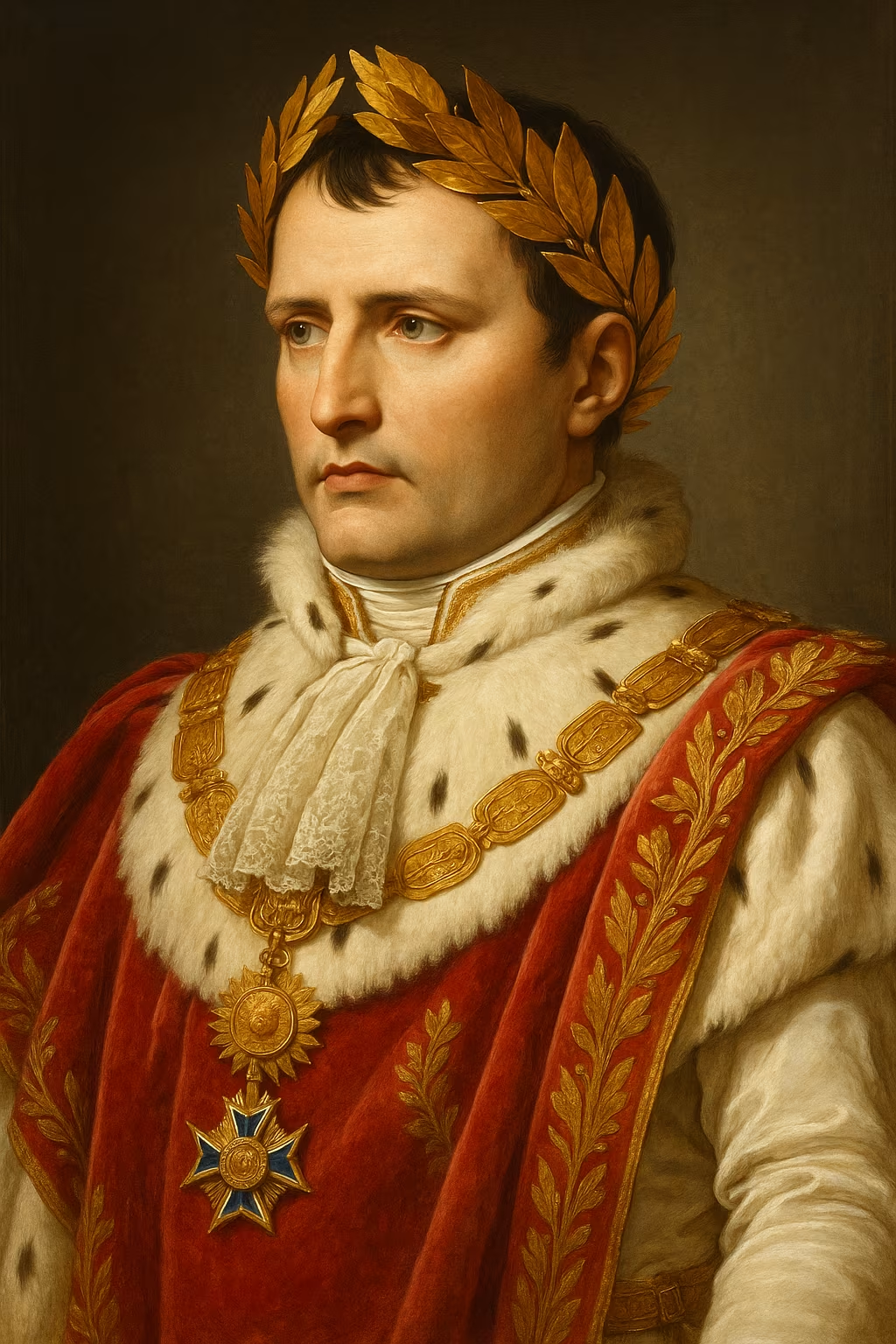
Napoleon Bonaparte
General, First Consul and Emperor of the French
Specialized Sites
Batailles de France
Discover battles related to this figure
Dynasties Legacy
In preparationFuture site on royal and noble lineages (not available yet)
Timeline France
In preparationFuture chronological timeline site (not available yet)